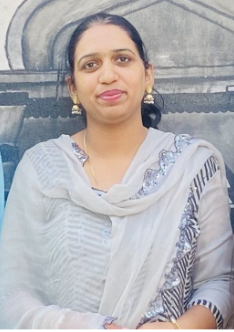
The Department of Computer Applications prepares students to design, develop and implement software applications. Department emphasizes on the latest programming languages, cutting edge technologies and tools to make the students ready for the IT Industry. We aim to become a center of excellence in providing in-depth technical knowledge and opportunities for innovation and research with state-of-the-art computer facilities and is to produce versatile students making them employment ready and capable of cross-disciplinary collaborations in industry/government sector/higher education/research and development/entrepreneurship.
To impart quality education for producing highly talented globally recognizable technocrats and entrepreneurs with sound ethics, updated knowledge, latest technological tools and innovative ideas in Computer Application to meet industrial needs and societal expectations.
1. To make students eligible professionals for requirement of industrial
platform.
2. To produce ethical, motivated, and skilled developers through
theoretical knowledge and practical applications.
3. To impart an ability for tackling simple to complex problems
individually as well as in a team.
The Department of Computer Applications offers comprehensive graduate programs designed to
equip students with core technical knowledge, real-world problem-solving skills, and the ability
to adapt to emerging technologies. Over the years, the department has expanded significantly,
nurturing talent and addressing the growing demands of the IT industry and society at large.
We currently offer the Bachelor of Computer Applications (BCA) and the B.Voc in Software
Development programs—both carefully structured to provide students with a strong academic
foundation and hands-on experience in computing and software technologies. These programs
aim to develop industry-ready professionals with a focus on practical skills, innovation, and
lifelong learning.
Our core mission is to train students to develop an inquisitive mindset, understand real-life
challenges, and build efficient software solutions for the betterment of society. We strive to make
our students future-ready by preparing them for advanced studies, entrepreneurial ventures, and
successful careers in the global IT landscape.
To support this vision, we regularly organize a variety of academic and co-curricular activities
such as product development workshops, skill enhancement programs, and
interdisciplinary projects, all of which encourage innovation and technical excellence.
Our strong alumni network of over 1,000 graduates is a matter of pride for the department. Many
of our former students are now employed in top-tier international companies like IBM, WIPRO,
INFOSYS, TCS, and others, while several have pursued higher education and research careers in
prestigious institutions globally.
We also maintain close collaboration with industry partners to ensure our curriculum remains
aligned with the latest trends and expectations of the fast-evolving IT sector.
As a dedicated team of educators and mentors, we are committed to taking the department to
greater heights of success and academic distinction. We look forward to welcoming passionate
students, researchers, and professionals to join us in fostering a culture of innovation, excellence,
and growth.
Join us and be a part of a future-focused, technology-driven learning journey
| S. No. | Program | Eligibility |
|---|---|---|
| 1. | BCA(Bachelor of Computer Applicatons) | Senior Secondary (10+2) examination with 40% marks in aggregate from Punjab School Education Board or equivalent thereto. |
| 2. | B.Voc(Software Development) | +2 pass in any stream |
The learning process and methodology in a Computer Applications department typically involve a blend of theoretical knowledge and practical skills development.
Theoretical Learning: Students are introduced to fundamental concepts such as programming languages, data structures, algorithms, database management, software engineering principles, and computer architecture through lectures, textbooks, and online resources.
Practical Application: Hands-on learning is emphasized through laboratory sessions, projects, and assignments. This allows students to apply theoretical knowledge to real-world problems, enhancing their problem-solving skills and understanding of how concepts are used in practice.
Project-based Learning: Students often work on projects individually or in groups, where they apply what they've learned to solve specific problems or develop software applications. These projects may range from simple exercises to complex, semester- long endeavors.
Case Studies and Real-world Examples: Case studies and real- world examples are used to illustrate how concepts and techniques are applied in industry settings. This helps students understand the relevance of what they're learning and prepares them for their future careers.
Continuous Assessment: Regular assessments, such as quizzes, tests, and exams, are conducted to gauge students' understanding of the material. Continuous assessment provides feedback to both students and instructors, helping to identify areas that need improvement.
Feedback and Iteration: Instructors provide feedback on students' work, guiding them on how to improve and addressing any misunderstandings. This iterative process helps students refine their skills and deepen their understanding of the subject matter.
Industry Engagement: Collaboration with industry partners, internships, guest lectures, and industry projects provide students with exposure to real-world challenges and industry best practices. This helps bridge the gap between academia and industry, preparing students for careers in computer applications.
Self-directed Learning: Students are encouraged to engage in self-directed learning, exploring topics of interest beyond the curriculum, participating in hackathons, attending workshops, and contributing to open-source projects. This fosters a culture of lifelong learning and adaptability, essential in a rapidly evolving field like computer applications.
Adaptation to Emerging Technologies: The department continuously updates its curriculum and teaching methodologies to keep pace with advancements in technology. This may involve integrating emerging technologies such as artificial intelligence, machine learning, block chain, and cybersecurity into the curriculum.
Internal Assessment is based on: Regular assessments throughout the semester including seminars, practical exams and viva voce.
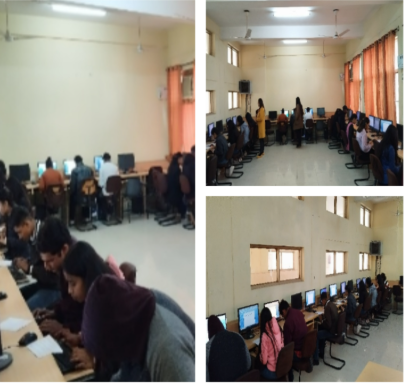
Well-equipped computer laboratories enhance the learning process and enable the proper conduct of the University prescribed courses. Branded Personal Computers are installed in Computer Labs, all networked to facilitate teaching in small batches, with adequate faculty attention.
CTIHS is one of the best Institute in Jalandhar,Punjab offering graduation degrees in various field.
Shahpur,PO-Udopur,Near Lambra,Jalandhar-144020,Punjab,INDIA.
Helpline No.:-
1800-137-2227
Student Helpline No.:-
+91-181-5055127
+91-181-5055128
+91-181-2995967